
How does a car GPS tracker work?

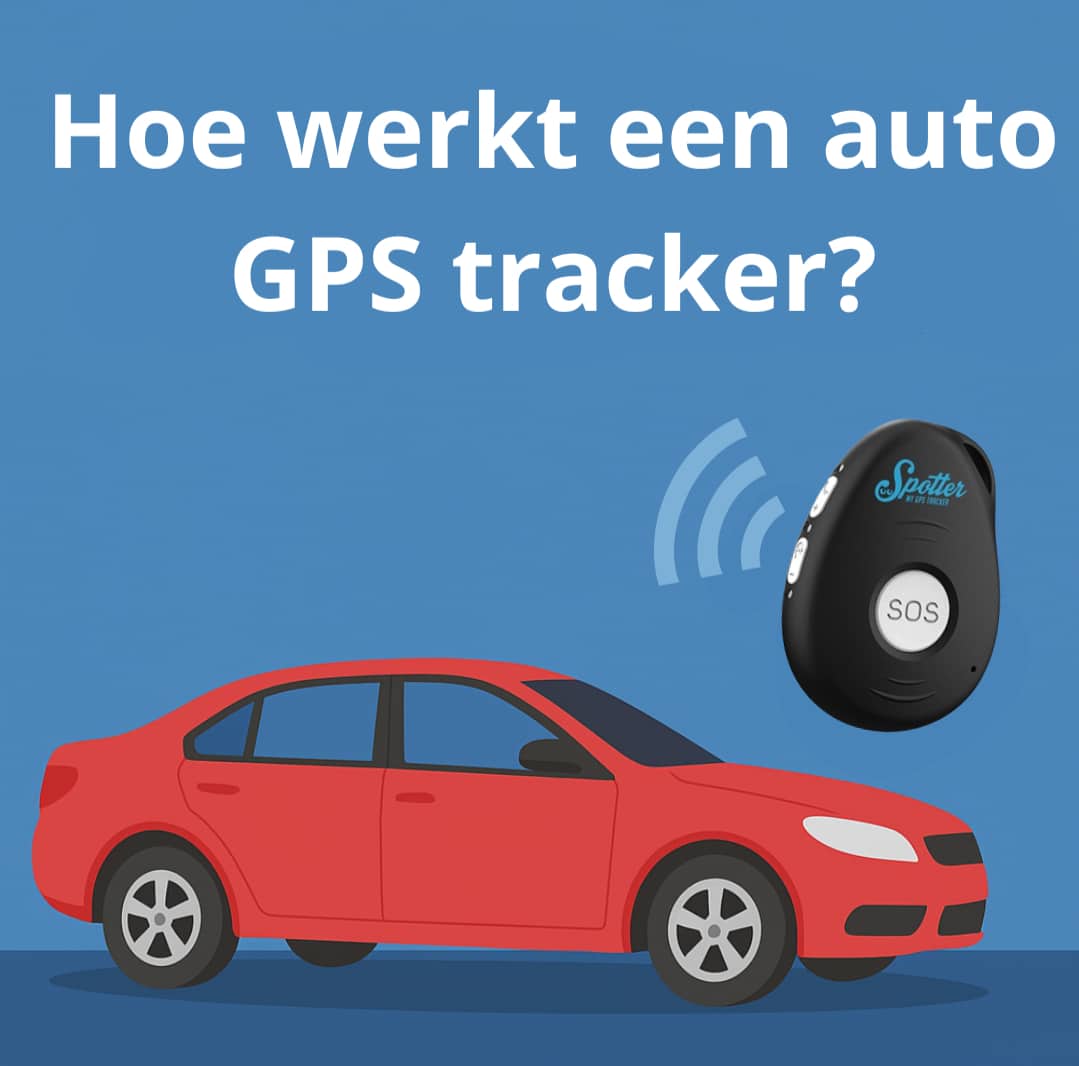
A GPS tracker is nowadays one of the most effective ways to secure a vehicle and always have insight into where it is. Yet many people do not know exactly how such a tracker works. It often seems more complex than it is. The technology behind it is actually surprisingly logical and reliable, as long as you understand which components together form the system. In this article I explain step by step how a car GPS tracker works, which variants exist and why a portable GPS tracker is ultimately almost always the best choice. I will also address the question of how a GPS tracker works throughout the text to explain the subject fully.
How a GPS tracker determines the location
Every GPS tracker for a car works on the basis of satellite signals. Orbiting the earth are dozens of GPS satellites that continuously transmit signals containing information about their position and the exact time. The tracker in the car receives these signals via a built-in antenna.
The tracker then compares several satellite signals at the same time. By analysing the time differences, the device can calculate exactly where it is. This process is called triangulation. The more satellites the tracker “sees”, the more accurate the location. Modern trackers often use not only GPS, but also Galileo or GLONASS. This makes them much more stable, especially in urban areas where tall buildings can obstruct the view of the satellites.
How the location is sent to your phone
Determining the location is one part of the technology. The second part is at least as important: the location has to be sent to you. This is where the SIM card in the device comes in.
A GPS tracker sends the position via mobile data (4G or sometimes 2G) to a server. That server converts the data and sends it to the app or online environment. Without a SIM card, no information comes in. That is why every tracker needs some form of data traffic.
So the chain looks like this:
- Satellites transmit signals
- The GPS tracker calculates the location
- The SIM card sends this location to a server
- You see the information in the app
Continuous or interval tracking
Not every GPS tracker works the same way. There are two main variants:
- Trackers that transmit continuously: these send the current location every few seconds. Perfect for theft protection, but they use more battery.
- Trackers that work on intervals: these send a signal every minute, every 5 minutes or only when there is movement, for example. Economical on the battery, but less suitable if you want to follow movement second by second.
Even a mini GPS tracker for a car can work surprisingly accurately, but the settings you choose largely determine energy consumption and reliability.
Built-in versus portable GPS trackers in cars
When people wonder how a GPS tracker works, they often think of built-in systems. Many modern cars have factory options that keep track of the location. Yet these systems work differently from portable trackers.
Built-in trackers:
- Often linked to the car system or navigation system
- More difficult to replace or move
- Easy for experienced thieves to recognise
- Sometimes limited in features
- Often more expensive because of brand-specific subscriptions
The big problem is that built-in trackers really are predictable. They are located in fixed places and are therefore easy to neutralise. For thieves, this has literally become a routine job.

Portable GPS trackers:
- Can be hidden anywhere in the vehicle
- Much more flexible and harder to find
- You choose the model, the size and the features yourself
- You decide on the subscription or data type yourself
- Often more setting options
- Suitable for any vehicle and easy to transfer
- Precisely because you decide yourself where to place the tracker, a car GPS tracker almost always stays better hidden.
Why a portable tracker is almost always better
What happens most often in practice is that people start with a built-in system, but later switch to a portable tracker after all. That is because with a portable tracker you retain full control over the device and the data. You decide yourself how often the tracker sends an update, which notifications you receive, which subscription you choose and where the device is placed. You are not dependent on fixed settings or brand-specific services.
A portable tracker is also not tied to one specific vehicle. You can move it to a new car, motorbike, campervan or work vehicle. A built-in system does not give you that freedom.
Conclusion
A GPS tracker for cars works more simply than many people think. The combination of satellite signals, a SIM card and an app makes it possible to always see where your vehicle is. The principle behind how a GPS tracker works remains the same for all models. The biggest differences are not in the technology, but in how you can use the device.
Where built-in systems are predictable, limited and less flexible, a portable GPS tracker offers freedom, control and maximum security. Compact models in particular are ideal for hiding out of sight. If you opt for reliability, freedom and real security, a portable tracker is almost always the best choice.


