A collar that is too loose slides over your cat’s head and gets lost. A collar that is too tight can chafe or even restrict breathing. So how tight should a collar be, especially when a tracker is attached to it as well? In this article we explain the rule of thumb that most vets use, and why a good buckle is at least as important as the tightness itself.
The rule of thumb: two fingers
The most widely used guideline is that you should be able to slide two fingers flat between the collar and your cat’s neck. If that fits exactly, the collar is snug enough not to slip over her head, but still loose enough not to pinch. If you can easily slide a whole hand under the collar, it is too loose. If not even one finger fits, it is too tight and you should loosen it straight away. Ideally, do this test while your cat is standing calmly, and not while she is playfully running around, because then you get a distorted result.
Why the right collar and buckle matter just as much
A correctly adjusted cat collar does not help if the right collar with a safety buckle is missing. So always choose a buckle that snaps open by itself as soon as an unexpected amount of force is applied, for example when your cat gets caught on something while climbing a tree or crawling through a fence. Without that function, a collar that is otherwise perfectly adjusted can still become dangerous at the very moment it matters. Do bear in mind that very young kittens are sometimes still too light to trigger such a buckle, so keep a closer eye on them until they have put on a bit more weight.
Check again regularly
A collar that fits perfectly today may not fit in a few weeks’ time. Kittens grow fast, and adult cats can also gain or lose a little weight through the seasons, especially with a thicker winter coat. So check the fit at least once a month with the two-finger test, and more often for young cats that are still growing. Also watch for signs that the collar is pinching, such as bald, chafed patches in the fur, redness of the skin or excessive scratching around the neck, and if in doubt, do not wait but adjust the collar right away.
How this relates to the weight of the tracker
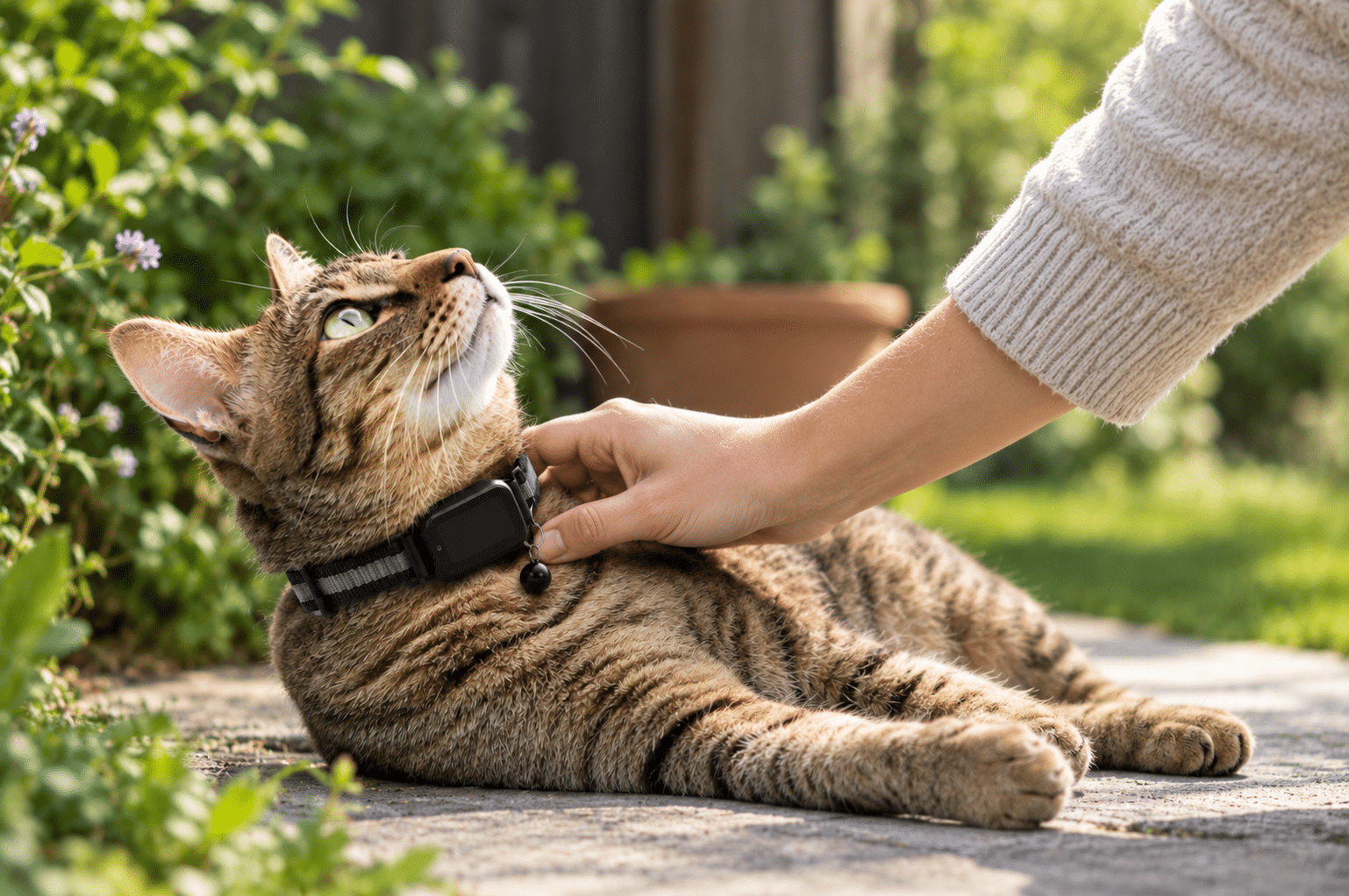
A cat gps tracker attached to the collar changes slightly how the collar sits: the weight pulls the strap a little downwards and forwards. So after attaching the tracker, go over it once more with the two-finger test, even if the bare collar already fitted well before. That way you know for sure that the device does not upset the balance and that the collar stays in the right place, instead of sagging to one side or sliding forward over the throat.
What if your cat keeps pulling at it?
Some cats keep scratching at a new cat collar for the first few days, even if the fit is fine. That is usually a matter of getting used to it and not a sign that something is wrong. Distract her with play or a treat right after putting it on, and check again after a few days whether she has really got used to it or whether something is rubbing after all. If she keeps pulling at the collar persistently and fiercely, check the fit and the position of the buckle again before putting it down to getting used to it.
Difference between kittens and adult cats
With kittens, regular checks are even more important than with adult cats, because they can change considerably in size within a few weeks. A collar that fitted perfectly when you bought it may already be too tight within a month. So schedule fixed check moments for a young cat, for example every two weeks, until she is fully grown and the fit stays more stable.
How the Spotter CatX makes this easier for you
The collar that comes with the Spotter CatX is adjustable and fitted with a safety buckle, so you can set the right tension yourself using the two-finger rule. Because the device is very light at 29 grams, little changes in the fit once you attach the tracker. Still in doubt? Simply check again with your fingers before your cat goes outside. It takes less than a minute and gives you instant peace of mind.