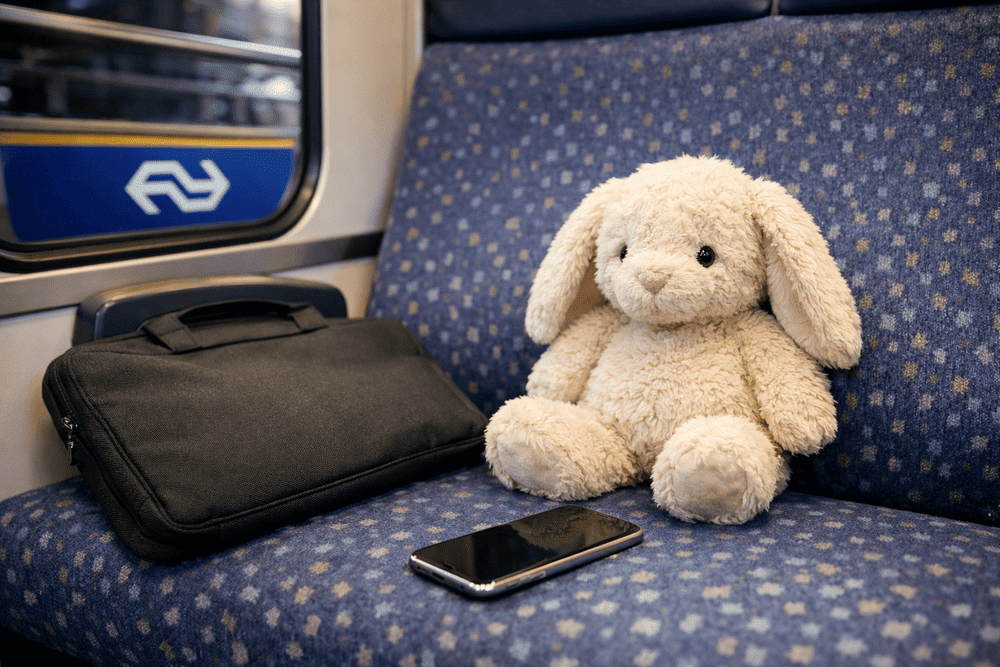
Last year, more than 65,000 items were found on trains and at stations. That works out at an average of 180 per day. Despite the familiar announcement when getting off, “As you leave the train, please remember your luggage and belongings,” things still go wrong all too often.
It is not just bags and phones that get left behind. Cuddly toys go missing too, according to the Dutch railways (NS). Over the past year, Sander the Sheep, Peggy the Penguin, Emir the Unicorn, Anthony the Monkey and Valerie the Fox were all forgotten on the train. During the Week of the Lost Cuddly Toy, from 15 to 19 December, NS is drawing extra attention to these five soft toys, in the hope that they will make it back to their owners before the holidays.
Lost property every single day
According to NS, a cuddly toy is found almost every day. About one in five soft toys eventually makes it home. For many other items that percentage is higher, but even so, half do not immediately find their way back to their owner.
The most commonly found items on trains and at stations are:
- Backpacks
- Mobile phones
- Wallets
- Bunches of keys
- Earphones and headphones
NS staff also find remarkable items such as air fryers, baby car seats and musical instruments. It shows how easily something gets forgotten, often due to haste, tiredness or distraction.
How the process works at NS
When a conductor finds an item, it is taken to an OV Service & Tickets shop. If it is not collected there, it goes to the Central Lost Property Office. NS can then send the item to its owner by post for a fee.
Identity documents and public transport chip cards are an exception and are handed over directly to the appropriate authorities. After three months, when the chance of someone still coming forward is small, many items are given a second life through organisations such as the Salvation Army and the Dutch Poverty Fund.
How a GPS tracker can prevent this
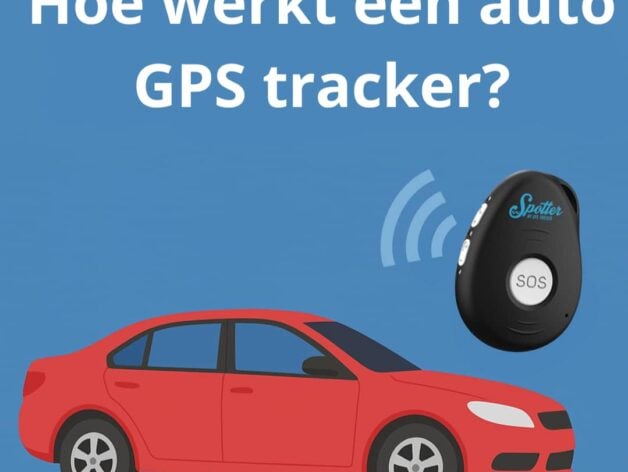
Although the NS system is well organised, prevention is still better than recovery. That is why more and more travellers are choosing to attach a GPS tracker to their bag, their bunch of keys or their wallet.
With a GPS tracker you can see straight away where your belongings were last located. If you have got off the train and are unsure whether you have left something behind, you can check immediately. In many cases you can still walk back before the train leaves, or take action through NS right away.
There is a caveat here too. A GPS tracker is no substitute for attentiveness. It remains important to check for yourself that you have everything with you. But as an extra safety net, it can prevent a lot of stress, time and disappointment.
Extra certainty, not a replacement for attentiveness
A GPS tracker is no excuse to pay less attention. That is important to say honestly. You still need to check for yourself that you have everything with you. So think of a GPS tracker as a smart safety net. Something that helps you at the moment when things do go wrong.
The NS figures show that forgotten items are no exception. By travelling more consciously and making use of smart technology, you reduce the chance that your belongings become part of the next 65,000.
This article is based on a publication by NS.