GPS tracker vs. Bluetooth tracker: what’s the difference?
If you’re looking for a way to track your belongings, pets, or vehicle, you’ll quickly come across two types of technology: the GPS tracker and the Bluetooth tracker. Both have their own way of working, advantages, and limitations. In this article, we explain how they work, what you can use them for, and when each option is the best choice.
How does a GPS tracker work?
A GPS tracker uses a network of satellites orbiting the Earth. The device receives signals from multiple satellites at the same time and calculates its exact position on Earth based on those signals. This position is then transmitted via a mobile network, usually 4G, to an app on your smartphone or an online platform. All of this happens almost in real time, meaning you can see the device’s location at any moment.
Because a GPS tracker relies on satellites and mobile networks, it works worldwide. Whether the device is on the next street or on the other side of the country, the location is always available as long as there is mobile coverage. This makes a GPS tracker especially suitable for applications where long distances are involved. If you would like to read more about how GPS works, we recommend you to read our article on this matter.
Features of a GPS tracker
A GPS tracker typically offers a wide range of features. The most commonly used feature is real-time tracking, allowing you to continuously follow the device’s location on a map. In addition, most GPS trackers store route history, so you can review which paths have been taken.
Geofencing is another popular feature: you set a virtual boundary around a specific area, and as soon as the device crosses that boundary, you receive an instant notification on your phone. Some models also include a motion sensor that sends an alert when the device starts moving unexpectedly, which is useful for theft protection. For vehicles, there are also models that monitor driving behavior, such as speed and harsh braking.
How does a Bluetooth tracker work?
A Bluetooth tracker works in a fundamentally different way. Instead of satellites, it uses Bluetooth to connect to nearby smartphones. When a phone with the corresponding app comes within range of the tracker, the tracker’s location is automatically shared with the owner. With popular systems like Apple AirTag or Tile, this happens through a large network of users: millions of phones act as anonymous receivers that relay your tracker’s position without other users noticing.
Bluetooth trackers are small, lightweight, and affordable. They don’t require a SIM card and often run for years on a single coin-cell battery. This makes them ideal for hiding in a wallet, bag, or keychain. We compared the most famous bluetooth tracker, the airtag, to our GPS tracker. For the comparison, we recommend you to read this article.
Features of a Bluetooth tracker
The features of a Bluetooth tracker are intentionally kept simple. The core function is making the tracker ring via the app, so you can quickly find a lost item if it’s somewhere in your home. The app also shows the last known location of the tracker, including the time when that location was recorded.
Some models also work the other way around: if you lose your phone, you can press the tracker to make your phone ring. In addition, many Bluetooth trackers offer a separation alert, notifying you if you’re about to leave the tracker behind, for example if you forget your bag in a restaurant.
The limitations of a Bluetooth tracker
This is where the major difference with a GPS tracker becomes clear, and it’s important to understand these limitations before making a choice.
The main limitation is range. Bluetooth has an effective range of roughly 10 to 30 meters. Beyond that distance, the connection is immediately lost. The location shown in the app is therefore not the current position, but the last known location when a phone was still nearby. If your bike is stolen and the thief rides it to another neighborhood, you will only see where the bike was, not where it is now.
The crowdsourced network may sound impressive, but it heavily depends on the density of users in a given area. In busy cities, it works reasonably well, but in rural areas, forests, or less populated regions, the network can be too sparse to provide reliable location data. A GPS tracker does not have this issue, as long as there is mobile coverage.
Another drawback is that Bluetooth trackers do not offer real-time tracking. You don’t see a moving dot on a map, but only snapshots of locations at moments when someone with the app was nearby. That’s fine for finding lost keys at home, but insufficient for tracking a stolen vehicle or a runaway pet.
Finally, Bluetooth trackers do not offer geofencing, route history, or motion alerts. The functionality is intentionally limited, which makes them easy to use, but also less versatile.
When should you choose which?
A Bluetooth tracker is ideal if you want to find small, valuable items that you tend to lose in or around your home, such as keys, a wallet, or a remote control. They are inexpensive, maintenance-free, and work for years without attention.
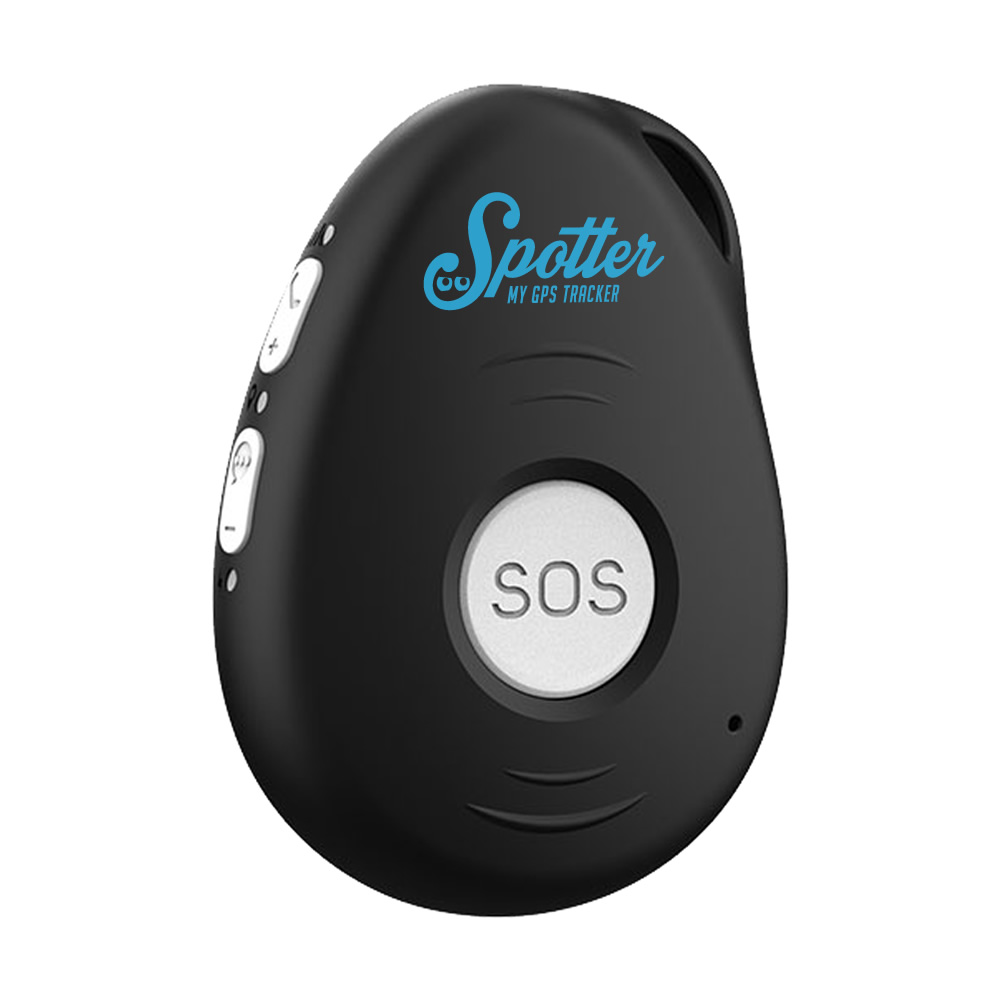
A GPS tracker is the better choice if you want to track something or someone over longer distances, or if real-time location is truly important. Think of securing a car or motorcycle, monitoring a pet outside the yard, protecting valuable luggage while traveling, or keeping an eye on a child or elderly person. The higher cost and the need for a subscription or SIM card are more than justified in these cases.
Conclusion
GPS trackers and Bluetooth trackers complement each other, but they are not interchangeable. A Bluetooth tracker is a convenient and affordable solution for finding lost items close to home. However, when you are dealing with larger distances, moving objects, or situations where every minute matters, a GPS tracker is the only reliable choice. Once you understand the limitations of both technologies, you can always choose the right device for the right purpose.
